PROCEDURE 03 · CHARGING
Battery and Charging Help in Wichita
The whole circuit tested end to end, readings documented, and nothing replaced that passed its check.
Call 316-374-5744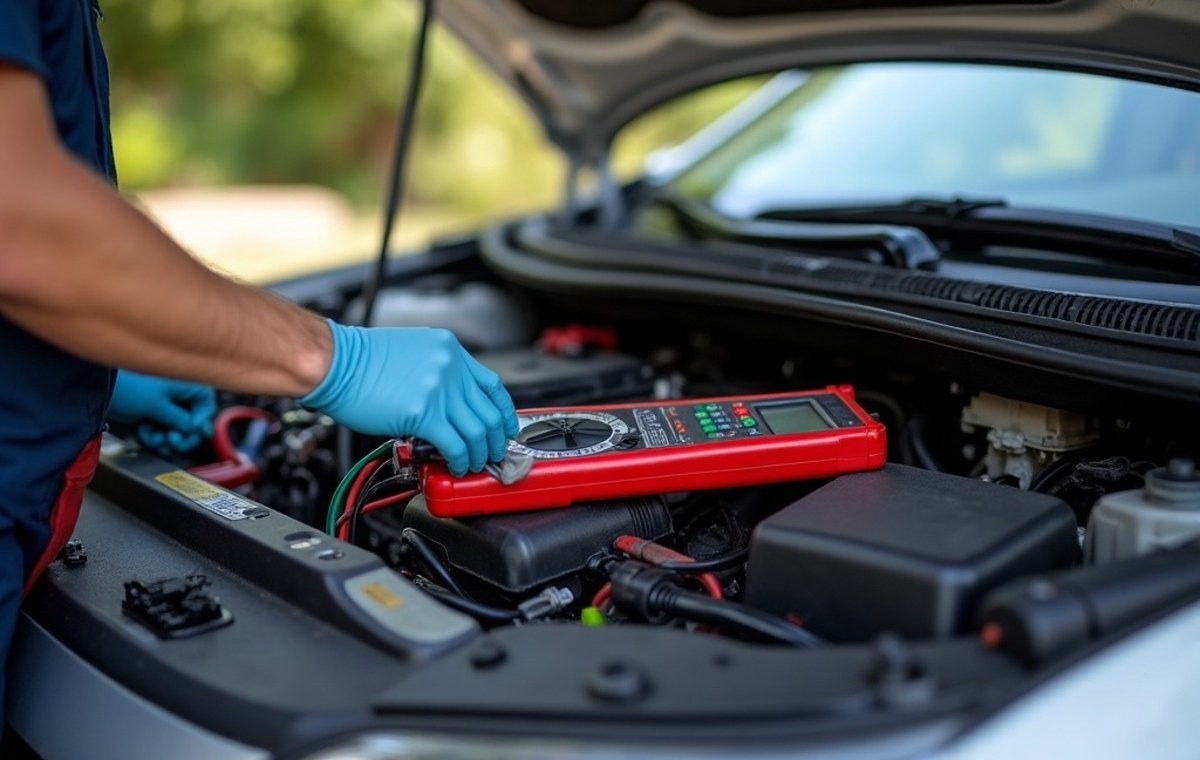
The Full-Circuit Check
Test points: battery · cables · alternator · draw
A battery complaint gets the complete loop, because half of them are not battery problems. Load test first, with the result printed. Voltage drop across the cables and grounds next, the test almost everyone skips and the place Kansas temperature swings do their quietest damage. Alternator output at idle and under load after that. And when the story includes a car that dies overnight, a parasitic draw measurement to catch whatever is sipping current while the driveway sleeps. Four checks, four readings, one correct answer instead of three hopeful receipts.
Replacement, Done to the Book
When the battery genuinely fails its test, the swap follows the full procedure: correct group size and cold-cranking rating for Kansas winters, terminals cleaned to bare metal and protected, hold-down torqued so washboard roads cannot shake the plates apart, electronics kept alive through the change so the car forgets nothing, and the battery registration performed on vehicles that require it, which is most of the newer ones and the step most often skipped in a parking lot swap. The old unit goes with me for proper recycling.
Heat Is the Real Enemy
Everyone blames the January morning, but the damage was done in July. Heat runs a battery's aging chemistry on fast-forward, and Wichita summers run hot enough to shave real months off the label's promise. The practical spec: test annually from year three, budget for replacement by year five, and if the car sits outside through the summer, lean those numbers earlier. A scheduled battery is a line item. An unscheduled one is a missed shift at the plant, and this town runs on people who cannot afford that trade.
Belt, Tensioner, and Alternator Together
The alternator gets the headlines, but it works for a belt, and the belt answers to a tensioner, and modern cars add a computer that decides when charging even happens. A glazed or loose belt undercharges so gradually that the battery takes the blame for months; a lazy tensioner eats belts and bearings alike; and start-stop vehicles demand the correct battery construction, AGM where specified, or the whole system ages on fast-forward. The full-circuit check reads the team, not just the star player, and the fix is frequently a belt and tensioner at a fraction of the alternator quote somebody else wrote. Bring the whole story when you call, including any squeal on cold mornings; that noise is often the confession.
Symptoms worth reporting exactly: headlights that brighten with engine speed, a battery light that flickers on bumps, accessories that lag on cold starts. Each one points at a different member of the team, and precise reporting routinely turns an afternoon of hunting into twenty minutes of confirming.
Jump starts becoming routine?
One documented test visit ends the guessing. Readings on paper, decision yours.
316-374-5744Four checks. Four readings. One answer.