PROCEDURE 04 · FAULT CODES
Check Engine Light Help in Wichita
A code is a squawk, not a diagnosis. The workup happens at your address, with live data, and ends in a written finding.
Call 316-374-5744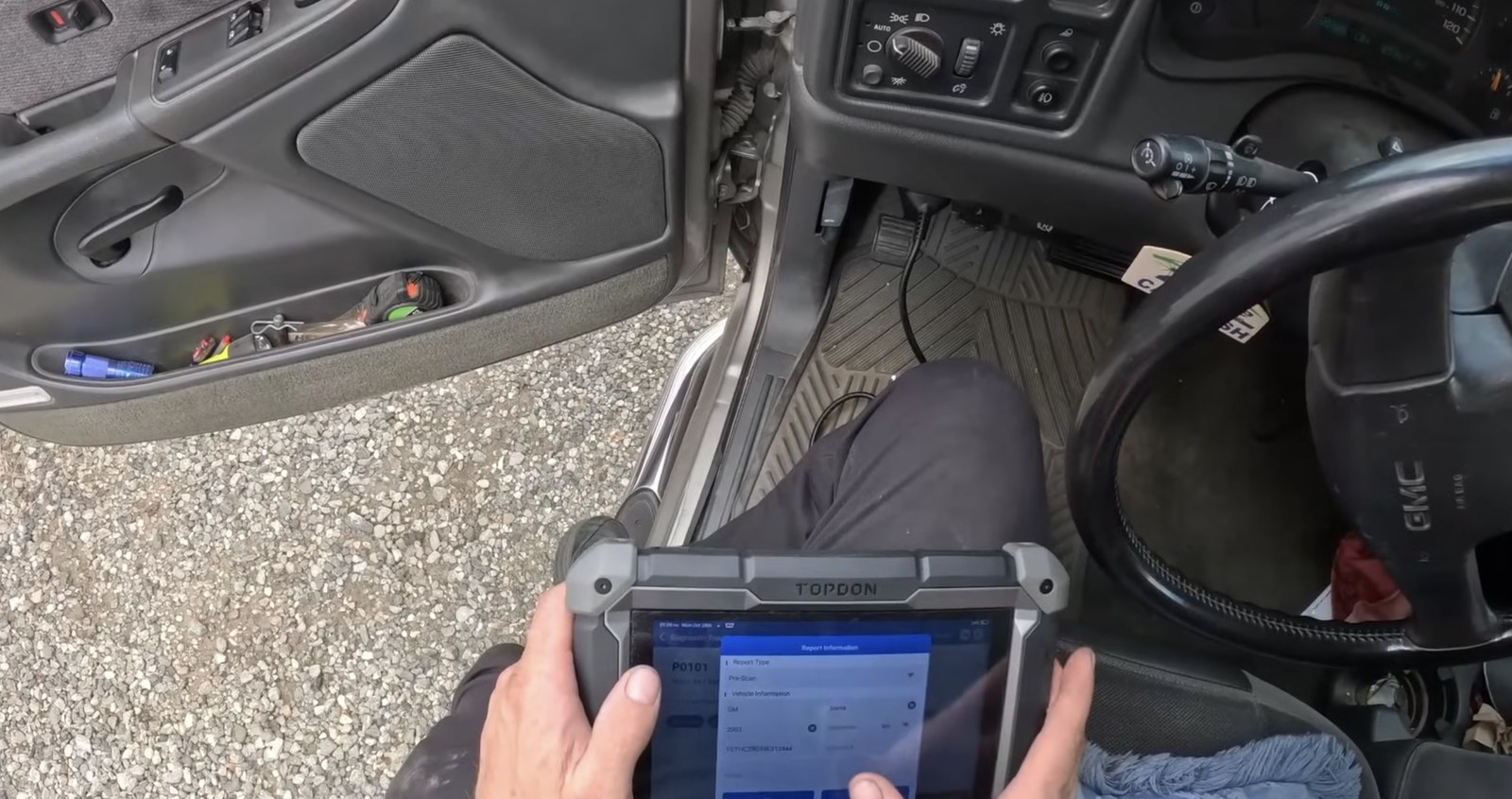
A Code Versus a Diagnosis
Live data · guided tests
On a flight line, a pilot writes up a squawk and a mechanic runs it to ground; nobody swaps parts off the write-up alone. Your check engine light deserves the same respect. The stored code names a system, not a component: a lean code might be a cracked hose, a tired sensor, a weak pump, or a leak the scanner cannot hear. The workup here reads live data with the engine under real load, commands components through their tests, and makes the suspect demonstrate its failure before it gets billed. The difference between that and a parts-counter scan is the difference between a diagnosis and a horoscope.
Steady or Flashing: What Each Means
Two different lights share one bulb. Steady means the computer logged a fault worth fixing on your schedule this week or next. Flashing means active misfire, unburned fuel cooking a glowing catalytic converter; keep driving and a spark-plug bill becomes an exhaust-system bill within miles. Flashing lights park the car and call the same day; they hold priority here just behind cars that will not run at all.
The Paper You Keep
Every code workup ends with documentation: the codes as found, the freeze-frame conditions when the fault set, the tests run, the readings, the verdict, and the price of the repair. If the fix happens on the spot, and most do, the paper becomes the invoice. If it belongs elsewhere, the paper rides with you and spares you a second diagnostic fee. One more procedural note: do not clear the code before the visit. Clearing erases the freeze frame, and the freeze frame is often half the evidence.
The Cost of Ignoring a Warning Light
A steady light that seems harmless is often billing you monthly anyway. A tired oxygen sensor drags fuel economy down a mile or two per gallon, every tank, for as long as it is ignored; a lazy thermostat code means the engine never reaches the temperature it was tuned for; a small leak in the evaporative system wastes fuel to the sky. None of these strand anybody, which is exactly why they survive for years, quietly outspending the repair they are asking for. When several codes stack up, the workup sorts causes from casualties, because one root fault frequently sets three or four codes downstream of itself, and the fix list is almost always shorter than the code list. That sorting is where a real diagnosis earns its fee.
And after any repair, the proof: the fault gets cleared, the drive cycle rerun, and the monitors watched until the computer itself agrees the problem is gone. A light that stays off for a week was fixed; a light that was merely erased comes back with interest. You get the first kind here.
Amber light on the dash?
Photograph it, leave it alone, and call. The evidence is already stored aboard.
316-374-5744Run to ground, not guessed at.