PROCEDURE 01 · BRAKES
Brake Repair in Wichita
Inspected against measurements, repaired to specification, and torque-verified before the road test. No step skipped, no step improvised.
Call 316-374-5744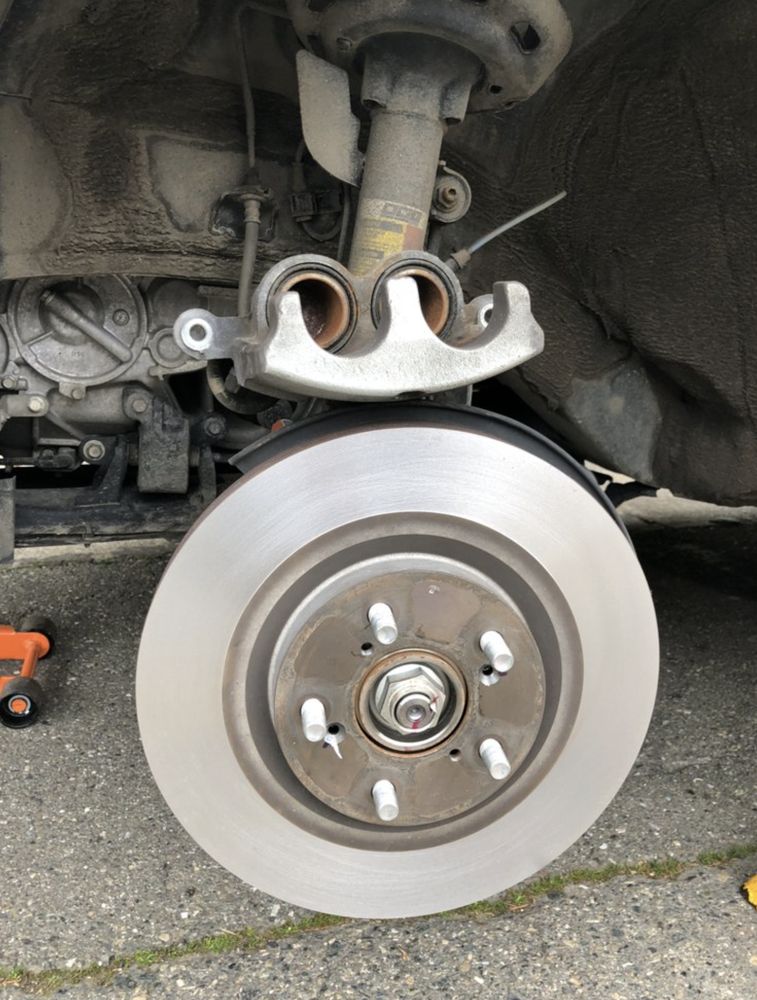
Measured, Not Eyeballed
Inspection standard
This is a town that builds airplanes, so nobody here needs convincing that measurement beats opinion. A brake inspection on this truck produces numbers: pad thickness in millimeters at all four corners, rotor thickness read against the stamped minimum, runout where symptoms call for it, fluid moisture content from a meter rather than a glance. The numbers go on your paperwork next to the manufacturer's limits, and the recommendation writes itself from the comparison. When a reading sits comfortably inside spec, you hear that too, in writing, which is how you know the rest of the report means something.
The Repair Procedure
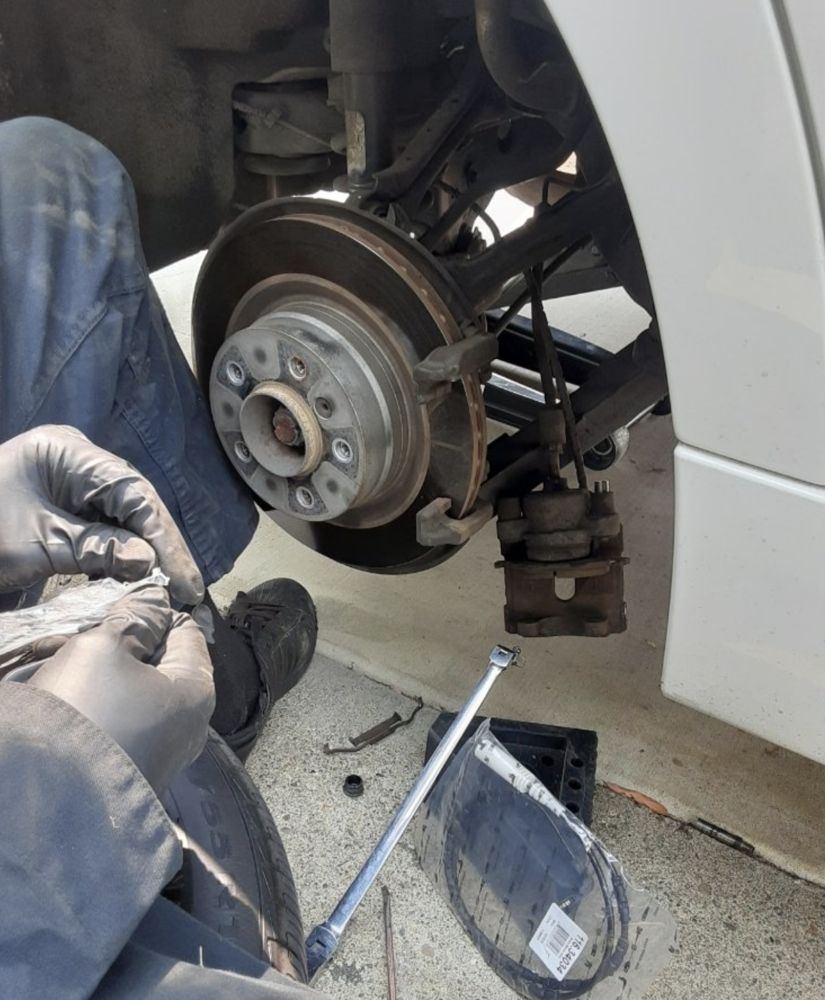
Parts matched to the vehicle, not to whatever the shelf wants to move. Caliper slides cleaned and lubricated on every pad job, because skipping that step is why so many brake jobs squeal their way back within a year. Hardware renewed where wear demands it, bleeding done when fluid or hydraulics were opened, and every fastener finished with a torque wrench set to the published value, wheel lugs included, in a star pattern, every time. It sounds fussy written out. It is also why the work holds.
Kansas Conditions, Noted
Wichita brakes live with long flat runs that let pads glaze, sudden panic stops when the deer or the hail arrives, and winters that swing forty degrees in a day and pull condensation into everything. The practical translations: brake fluid here earns a moisture test annually, rubber components get flexed and inspected past their pretty exteriors, and any car that tows or hauls out toward the lakes gets its rear brakes treated as seriously as its fronts. Local conditions are just another spec sheet, and the truck carries it memorized.
Towing and Load Considerations
A pickup that pulls a boat to Cheney or El Dorado is running a different brake equation than the same truck empty, and the inspection should admit it. Loaded weight moves braking work rearward, cooks more heat into every stop, and turns a marginal rear axle into the weak link nobody measured. Trucks that tow get their whole system judged against the trailer they actually pull: pad compound up to the job, rear brakes measured with the same care as fronts, fluid fresh enough to hold its boiling point on a long grade of stop-and-go with the lake traffic. Say the word trailer when you book and the inspection arrives calibrated for it. The trailer's own brakes and bearings deserve their season check too, and while this truck does not service trailers, it will happily flag what it sees before the first launch weekend does.
One more flat-land note: long cruise-control miles let pads and rotors glaze into a polished surface that measures fine and behaves badly, squealing at low speed and fading when asked to work. The cure is cheap, sometimes as simple as a few firm, deliberate stops on an empty road, and telling glaze from wear is precisely why this inspection reads surfaces as well as thicknesses. A number without a judgment is only half an answer.
Pedal out of spec?
Describe the symptom and get an inspection with numbers on it, at your address.
316-374-5744Torque-verified. Road-tested. Documented.